
Buying guide · 2014 to 2024Updated
Jaguar F-TYPE (R and SVR) buying guide
The F-TYPE R and SVR are best bought from 2020 to 2024, with proof the V8's plastic coolant pipes were dealt with and an independent inspection before you pay.
The F-TYPE as a used buy
The supercharged 5.0-litre V8 in the F-TYPE R and SVR has plastic coolant pipes that are prone to cracking, so ask for proof of the update before you look at anything else. CarsCounsel also names 2020 to 2024 as the best years, and Auto Express calls reliability reasonable but a sticking point, which is why an independent pre-purchase inspection is not optional.
The roadster was unveiled in September 2013 and the coupe followed in spring 2014. The SVR arrived in summer 2016 with 567bhp, a 200mph top speed and ceramic brakes as standard, in coupe and convertible form. Jaguar dropped the F-TYPE after the 2024 model year.
Weight is worth knowing about before you fall for the numbers. For an aluminum car it is heavy: evo quotes 1743kg for the 2020 R, and Rush Magazine says V8 all-wheel-drive cars often exceed 1,700kg. Browse a used F-TYPE R or a used SVR with that in mind.
F-TYPE years and versions
Avoid 2014 and 2015 if you can. CarsCounsel rates them the least favorable years because of early defects, and early cars are the ones with melting soft-touch trim on the steering wheel and door panels and infotainment that freezes.
A spring 2017 facelift brought a revised interior, better infotainment and LED headlights. The big change came in 2020: new front and rear styling, improved suspension and chassis parts, new 20-inch wheels and a technology upgrade. The standard R took the SVR's full-strength 567bhp V8, up from 542bhp, and the supercharged V6 was dropped. The 2020 R also got new springs and dampers, plus stiffer rear knuckles, tighter bushings and uprated wheel bearings, evo reports.
Drive layout matters too. All-wheel drive was optional on V8 R models early on and is part of later V8 cars. Both evo and Auto Express call it a worthwhile upgrade over rear drive and say it feels much more secure. Rush Magazine adds that the V8 has an electronic limited-slip differential, where the V6 S has a mechanical one.
We track SVR coupes, SVR convertibles, facelift R coupes and R convertibles. The coupe has 407 litres of boot, the roadster 200 litres, so the body style decides how much luggage you can carry.
F-TYPE versions for sale now
Every version in our latest scan, most listed first. Each links to its own page with deal analysis and market history.
| Version | Model years | For sale | Median price |
|---|---|---|---|
| F-TYPE R Coupe (facelift) | 2020-2022 | 5 | $49,235 |
| F-TYPE SVR Coupe | 2017-2019 | 5 | $68,994 |
| F-TYPE R Convertible (facelift) | 2020-2023 | 2 | $56,392 |
| F-TYPE SVR Convertible | 2017 | 1 | $63,357 |
Common F-TYPE problems
Coolant pipe cracking
The plastic coolant pipes on the 5.0-litre V8 crack, and a failed one can cause overheating. Fault File adds that the crossover pipes and hoses on V6 and V8 cars can crack or weep, and budgets roughly £800 to £1,500 for new pipes.
Noisy camchain tensioners
Some V8s develop noisy camchain tensioners, according to The i Paper.
Harsh automatic shifts
The ZF eight-speed can shift harshly. A fluid and filter service costs around £300 to £500 by Fault File's figures, and it is the obvious first step.
Rear differential leaks
Faulty seals can let the rear differential leak, says Quelle Occasion.
Electrical and cooling faults
What Car magazine rates reliability as mixed, with owners reporting electrical faults, warning lights and cooling failures. NHTSA's complaint records show a similar pattern, with the electrical system and engine the leading components.
Early infotainment and trim
Early InControl systems freeze and lag, and facelift cars are better. Early cars also have soft-touch material that melts on the steering wheel and door panels.
What to check on a used F-TYPE
Use this list at the viewing, then pay for an independent pre-purchase inspection.
- Ask for proof that the plastic coolant pipes were updated on a V8 car.
- Check around the front of the engine bay for coolant staining or damp hoses.
- Listen for engine noise on a cold start, which can point to the camchain tensioners.
- Ask for the gearbox fluid history, since the fluid needs changing every 70,000 miles despite the sealed-for-life label.
- Feel for harsh shifts on the drive, both cold and warm.
- Look under the rear of the car for oil weeping from the differential seals.
- Check that the central air vent rises and the door handles pop out as they should.
- Inspect the underbody bracing for corrosion.
- Run an early car's infotainment through its menus and watch for freezing or lag.
- Press the steering wheel and door panel trim for sticky or melted surfaces.
F-TYPE running costs
Auto Express quotes £400 to £700 for a minor service, due every 12 months or 16,000 miles.
Fault File puts the ZF fluid and filter service at around £300 to £500, and coolant pipes at roughly £800 to £1,500. On an SVR, Auto Express says replacement ceramic brake parts carry very high prices, so have the discs assessed before you buy.
F-TYPE recalls and complaints
NHTSA lists 14 recall campaigns for the F-TYPE across 2014 to 2024. Two stand out: a 2019 campaign on V6 and V8 cars, where the crankshaft pulley retaining bolt may fracture, and a 2020 one where the ABS startup check may not finish in time and could disable ABS and stability control for that drive. Others cover seat belts, air bags and a fuel rail leak on 2018 cars with the 2.0-litre engine. A campaign for one model year does not mean every car of that year was affected, so check the car's VIN at NHTSA's recall lookup.
Owners have filed 37 complaints with NHTSA, and the electrical system and the engine account for 11 apiece. They are reports, not proven faults.
NHTSA recalls for the F-TYPE
Every recall campaign the carmaker filed with NHTSA for the 2014 to 2024 model years, newest first, as of Oct 31, 2026. Not every car of a listed year was affected: check a car's VIN at nhtsa.gov/recalls.
| Campaign | Reported | Model years | Component | What can happen |
|---|---|---|---|---|
| 22V524000 | Jul 21, 2022 | 2022 | Seat belts | Improperly restrained occupants have an increased risk of injury during a crash. |
| 21V667000 | Aug 26, 2021 | 2021 to 2022 | Seat belts | An unsecured child restraint system can increase the risk of injury during a crash. |
| 21V500000 | Jul 1, 2021 | 2018 | Air bags | An air bag that tears on deployment can increase the risk of injury during a crash. |
| 21V167000 | Mar 11, 2021 | 2020 | Service brakes, hydraulic | A disabled ABS or DSC system could increase the risk of a crash. |
| 19V682000 | Sep 27, 2019 | 2019 to 2020 | Equipment | An incorrect tire placard label may mislead the vehicle owner to install the wrong tire size, potentially affecting vehicle handling, increasing the risk of a crash. |
| 19V326000 | Apr 25, 2019 | 2014 to 2015 | Air bags | In the event of a crash necessitating air bag deployment, an incorrect classification may result in the passenger frontal air bag deploying even if there is a child in the front passenger seat, increasing their risk of injury. |
| 19V039000 | Jan 17, 2019 | 2019 | Engine and engine cooling | Engine failure may increase the risk of a crash. |
| 18V090000 | Feb 2, 2018 | 2018 | Fuel system, gasoline | A fuel leak in the presence of an ignition source such as hot engine or exhaust components can increase the risk of a fire. |
| 17V341000 | May 25, 2017 | 2018 | Exterior lighting | Without the change to the flash and chime rate, the driver may not know that a turn signal is not working. If the turn signal is not working, other drivers will not be aware that the vehicle is turning, increasing the risk of a crash. |
| 16V940000 | Dec 28, 2016 | 2017 | Seat belts | If the front seat seatbelt pretensioners do not function properly, the seat occupants may not be adequately restrained in the event of a crash, increasing the risk of injury. |
| 16V789000 | Oct 28, 2016 | 2017 | Suspension | If the lower control arm bolt connecting bolt fails, the rear control arm assembly may separate from the vehicle, resulting in a loss of control and increasing the risk of a crash. |
| 15V569000 | Sep 11, 2015 | 2016 | Steering | If the vehicle is in motion when this occurs, the driver may unexpectedly lose the ability to control the vehicle, increasing the risk of a crash. |
| 14V714000 | Nov 7, 2014 | 2014 to 2015 | Electrical system | Should the STS not have been wired correctly, the front passenger air bag may not be suppressed, and may remain activated, even when a child restraint is placed in the front passenger seat or a small statured adult occupies that seat. In the event of a crash necessitating deployment of the front… |
| 14V673000 | Oct 27, 2014 | 2015 | Electrical system | If the battery positive cable loosens, an electrical short may result, increasing the risk of a fire. If the FEAD belt looses or detaches, the vehicle may lose power assisted steering, increasing the risk of a crash. |
Owner complaints to NHTSA about the F-TYPE
Owners filed 37 complaints with NHTSA for the 2014 to 2024 model years (1 crash and 3 fires reported). A complaint is an owner's report, not a confirmed defect. A complaint can name more than one component.
| Component | Complaints |
|---|---|
| Electrical system | 11 |
| Engine | 11 |
| Power train | 7 |
| Exterior lighting | 6 |
| Fuel/propulsion system | 6 |
| Unknown or other | 4 |
| Electronic stability control (esc) | 3 |
| Steering | 3 |
Best F-TYPE deals right now
3 deals priced below market right now, the best by about $5,544. Members get the VIN, dealer, listing link and a ready-to-send negotiation email for each one.
-
 $4k below market Locked
2023 Jaguar F-TYPE
Facelift R Convertible
Good deal: about $4k under fair value for its year, trim and miles.
Asking price $59,794Deal score 78 -
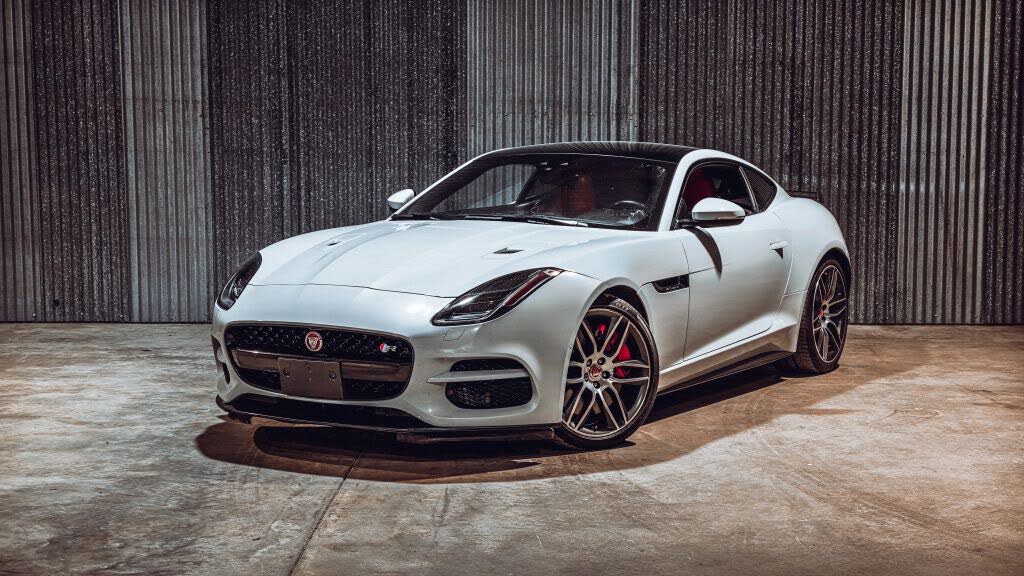 $3k below market Locked
2020 Jaguar F-TYPE
Facelift R Coupe
Good deal: about $3k under fair value for its year, trim and miles.
Asking price $45,220Deal score 76 -
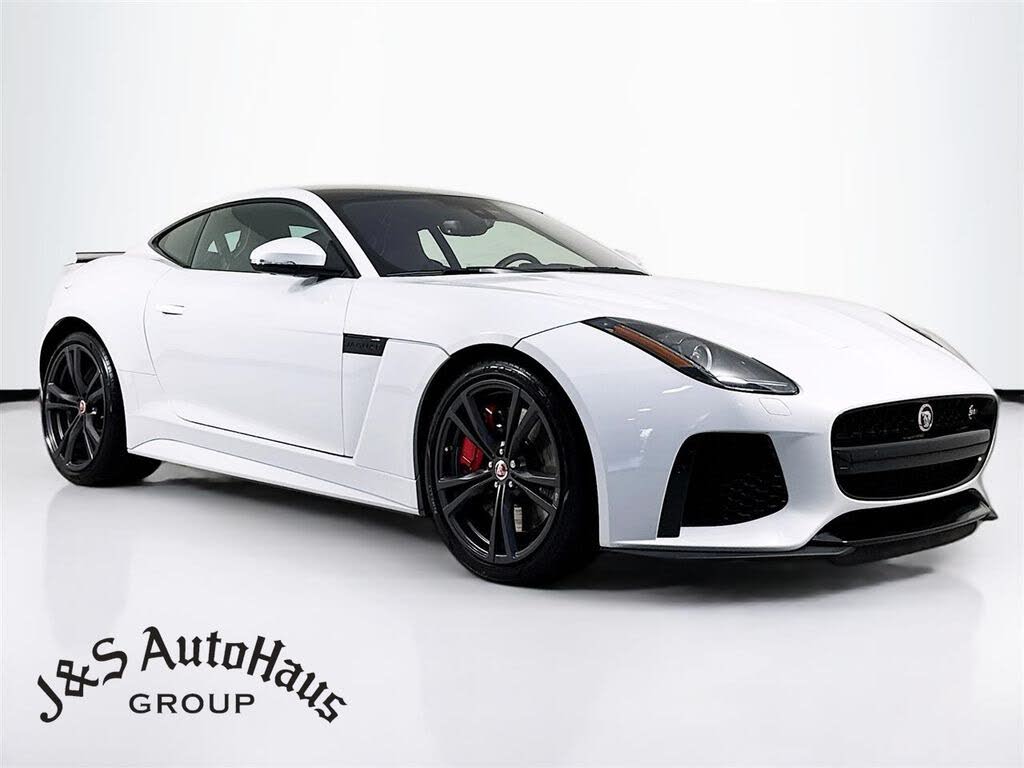 $6k below market Locked
2017 Jaguar F-TYPE
SVR Coupe
Good deal: about $6k under fair value for its year, trim and miles.
Asking price $67,790Deal score 73
Members see every deal's VIN, dealer and listing link, plus a negotiation email.
F-TYPE prices by model year
Median asking price for each model year in our latest scan, with the number of cars listed and their price range.
- 2023 $59,794
- 2022 $68,900
- 2021 $65,480
- 2020 $48,543
- 2019 $55,194
- 2018 $70,757
- 2017 $68,392
F-TYPE fair values by trim and year
Our fair value is what comparable cars, same trim and model year with typical miles, are listed at in our latest market data. A car well under it is worth a close look; a car well over it needs a reason.
| Trim | Model year | Fair value | Typical miles |
|---|---|---|---|
| R | 2023 | $78,331 | 5,400 |
| R | 2022 | $65,191 | 22,700 |
| R | 2021 | $62,646 | 22,700 |
| R | 2020 | $58,248 | 30,700 |
| SVR | 2020 | $67,347 | 27,100 |
| SVR | 2019 | $60,993 | 41,400 |
| SVR | 2018 | $75,017 | 10,000 |
| SVR | 2017 | $64,870 | 28,900 |
F-TYPE for sale now
-
2020 Jaguar F-TYPE
Facelift R
Asking price $45,220 -
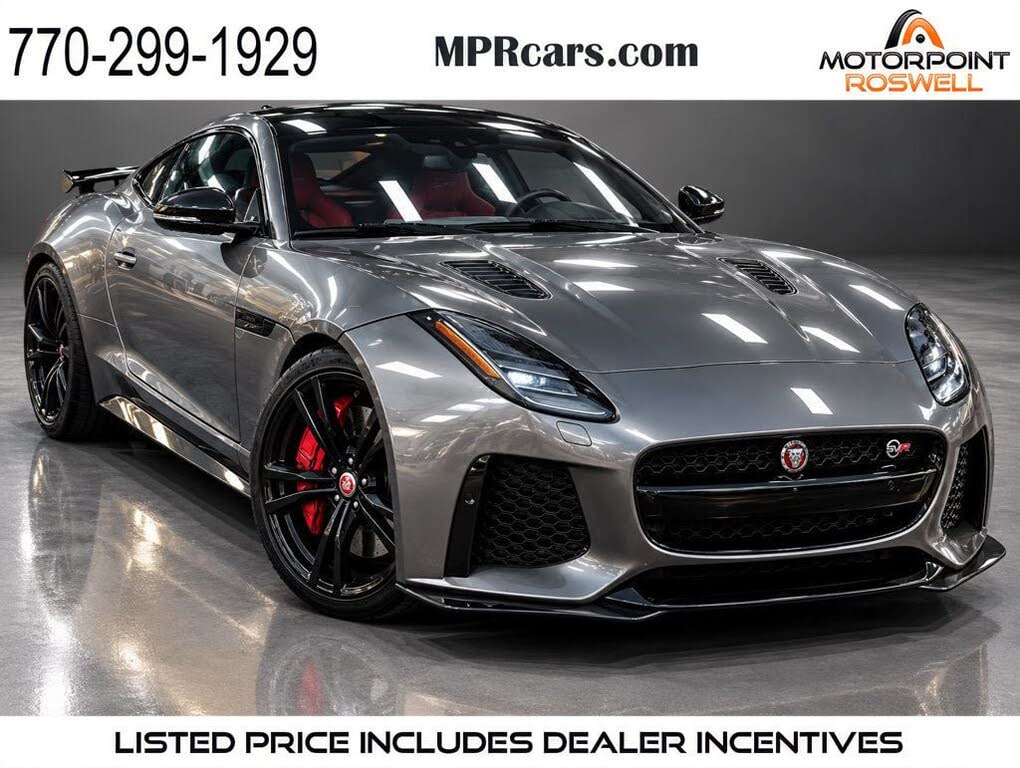
2018 Jaguar F-TYPE
SVR
Asking price $70,757 -
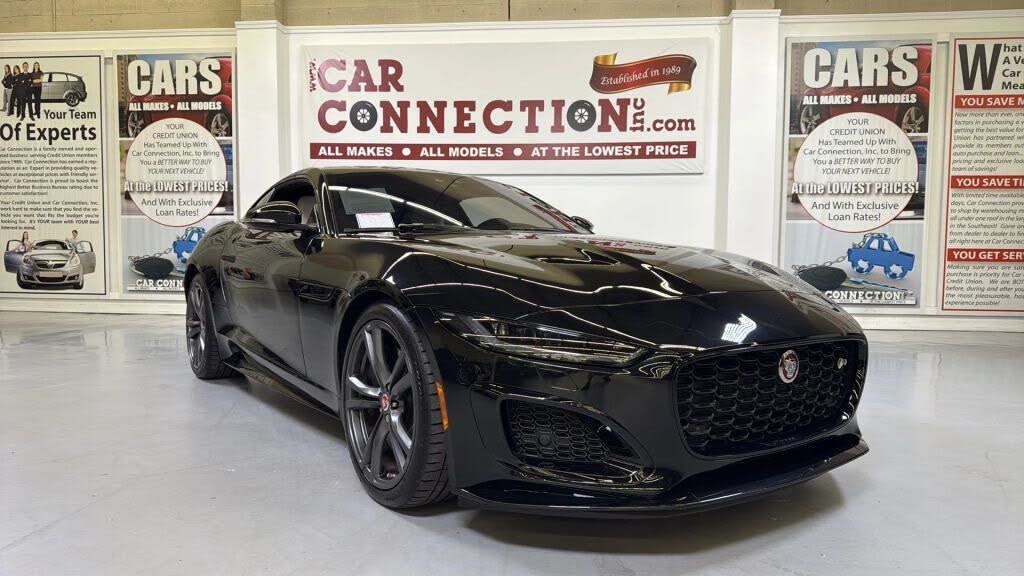
2022 Jaguar F-TYPE
Facelift R
Asking price $68,900 -

2020 Jaguar F-TYPE
Facelift R
Asking price $49,235 -
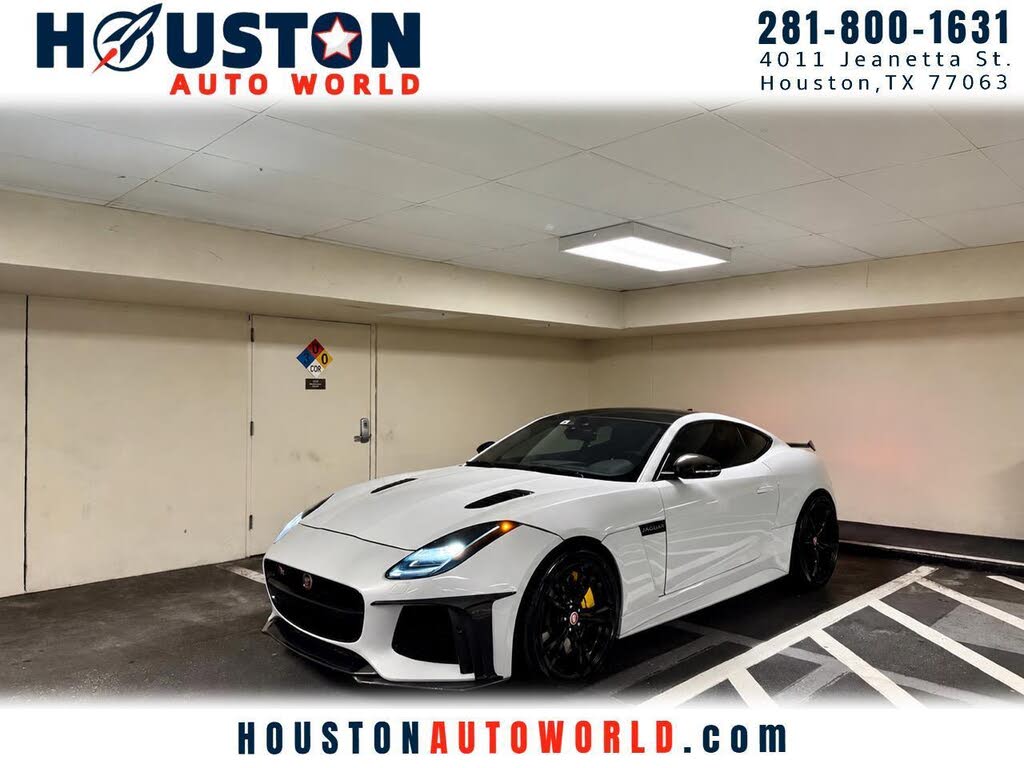
2019 Jaguar F-TYPE
SVR
Asking price $55,194 -

2017 Jaguar F-TYPE
SVR
Asking price $68,994 -
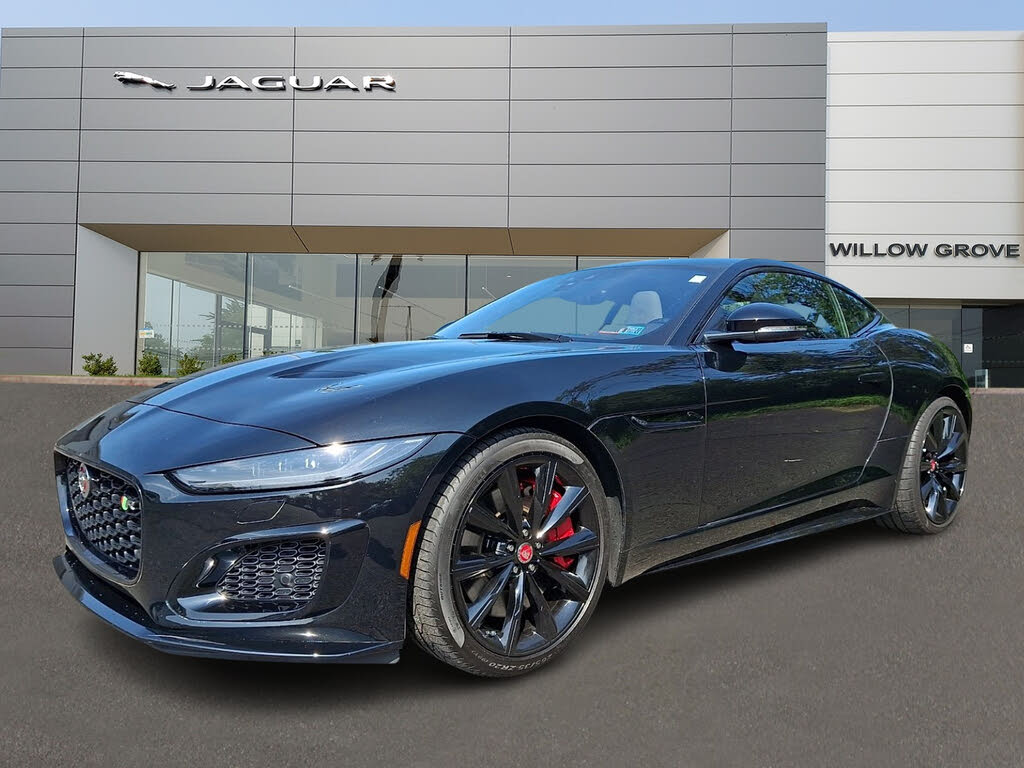
2021 Jaguar F-TYPE
Facelift R
Asking price $65,480 -
2023 Jaguar F-TYPE
Facelift R
Asking price $59,794 -
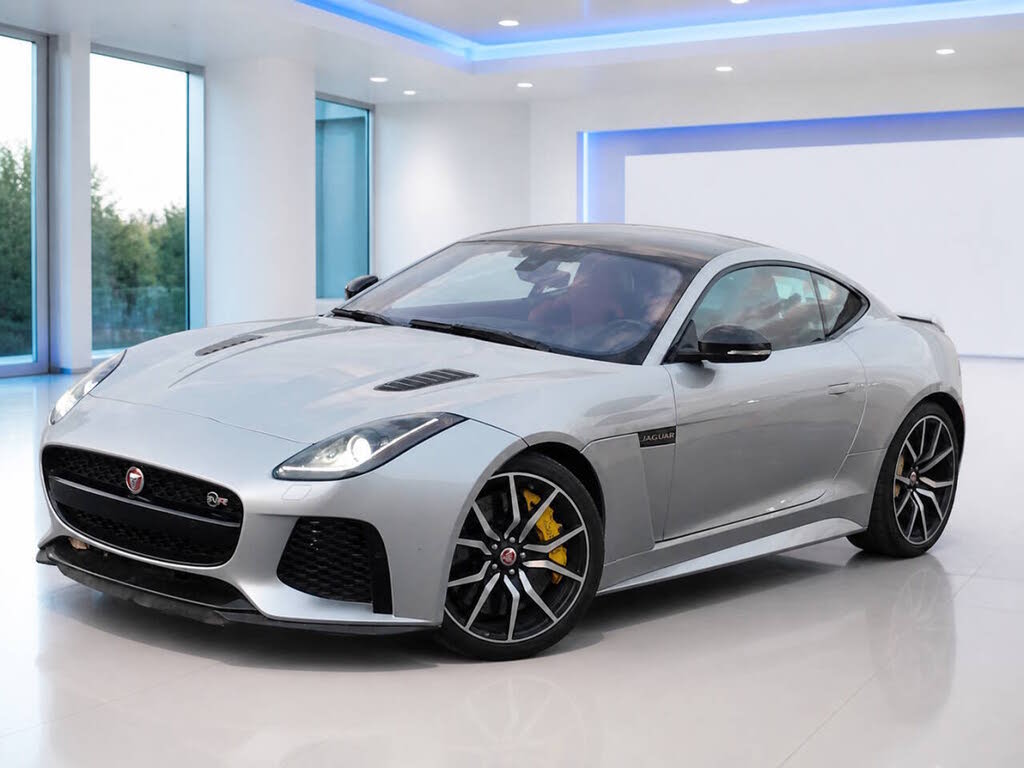
2017 Jaguar F-TYPE
SVR
Asking price $69,999 -
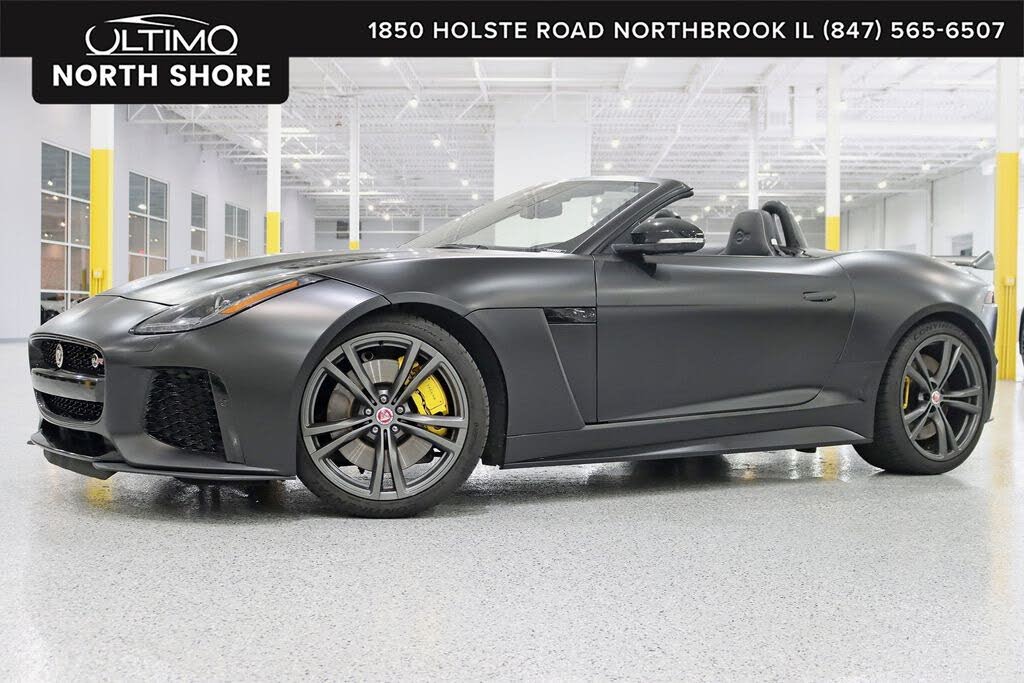
2017 Jaguar F-TYPE
SVR
Asking price $63,357 -
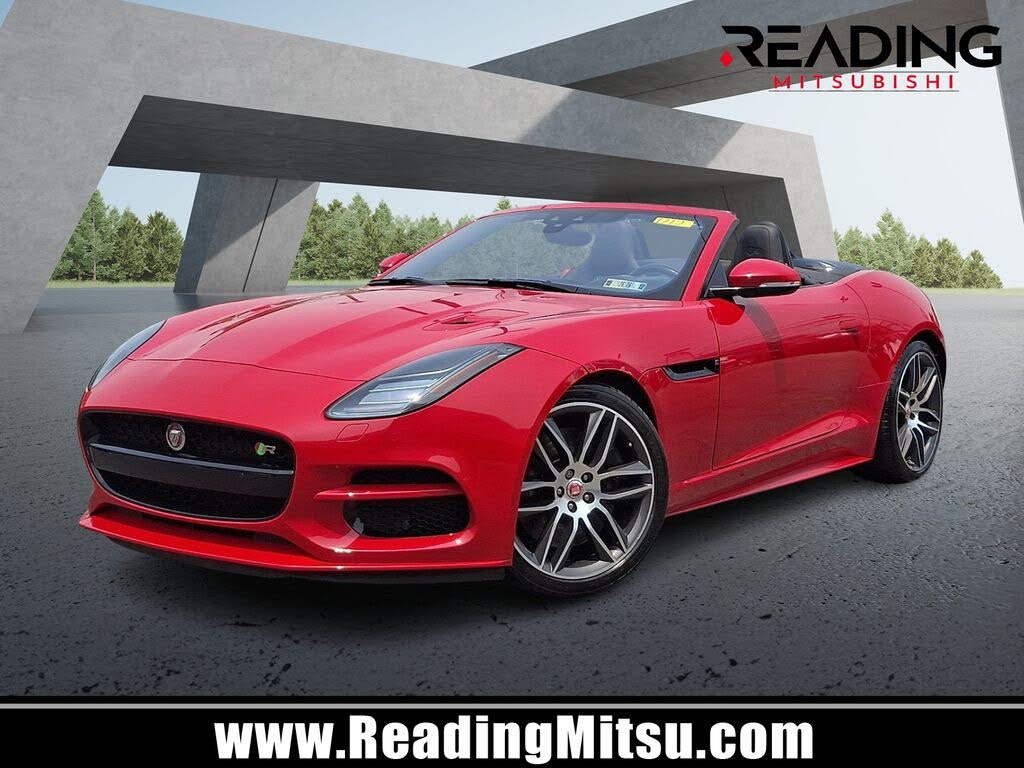
2020 Jaguar F-TYPE
Facelift R
Asking price $52,990 -
2017 Jaguar F-TYPE
SVR
Asking price $67,790 -
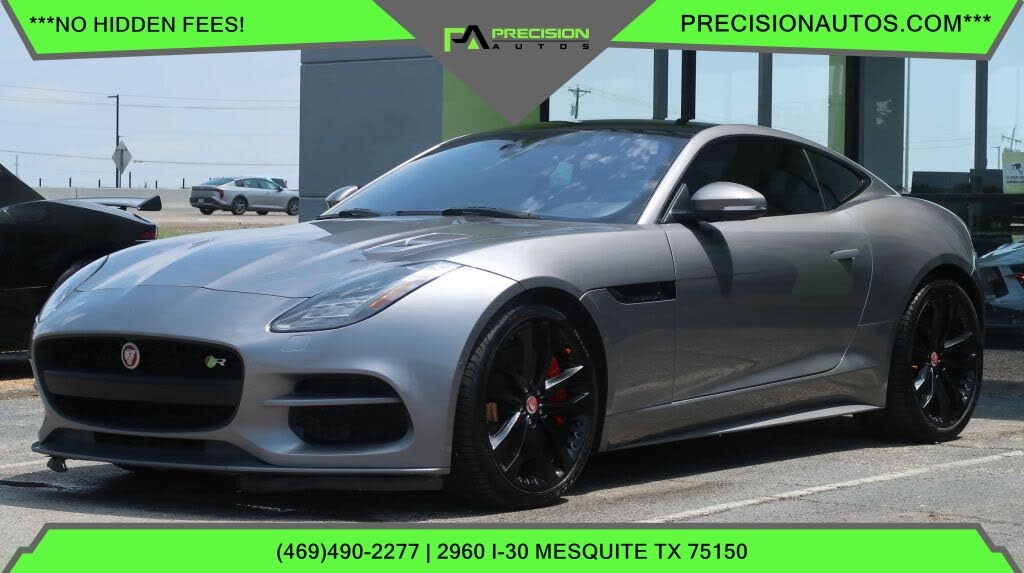
2020 Jaguar F-TYPE
Facelift R
Asking price $47,850
Our verdict
Look for a 2020 or later R, preferably all-wheel drive, since it has the 567bhp V8 and the revised suspension. Take an SVR only if you accept ceramic brake costs. Skip 2014 and 2015 cars, given the early defects CarsCounsel describes. Our F-TYPE price guide shows how years and trims differ.
Walk away from any V8 with no record of the coolant pipe update or the gearbox fluid change, and have an independent specialist inspect the car before you hand over money.
Sources
We read these pages and checked every fact in this guide against them. The words are ours. Researched Oct 31, 2026.
- Used Jaguar F-Type (Mk1, 2013-2024) review Auto Express
- Jaguar F-Type Buyer's Guide - Everything You Need to Know Rush Magazine
- Used Jaguar F-Type (2013 - 2024) review and buyer's guide evo
- Best and Worst Jaguar F-Type Years: What to Buy & Avoid CarsCounsel
- Jaguar F-Type common problems & reliability | Fault File Fault File
- Used Jaguar F-Type Coupé 2014-2024 What Car?
- Used car buying guide: Jaguar F-Type Autocar
- Buying used: Jaguar F-Type – The i Paper The i Paper
- Used Jaguar F-Type (2013–2024): reliability, common problems and prices Quelle Occasion
- Recalls and owner complaints for the F-TYPE NHTSA
More Jaguar buying guides
F-TYPE: common questions
What is the best F-TYPE to buy?
A 2020 to 2024 R, preferably all-wheel drive, is the one to find. CarsCounsel names those years as the best, and the 2020 update gave the R the SVR's 567bhp V8 and revised suspension. Choose the SVR if you want ceramic brakes.
What goes wrong with the F-TYPE?
Cracking plastic coolant pipes on the V8 are the main concern, followed by noisy camchain tensioners, harsh automatic shifts and rear differential seal leaks. Early cars also have laggy infotainment and melting interior trim. Owners have reported electrical faults and warning lights as well.
Is the F-TYPE reliable?
Reliability is mixed, according to the sources we read. What Car magazine rates it that way, and owners report electrical faults, warning lights and cooling failures. The coolant pipes and gearbox service history are the first things to verify.
How much does it cost to run an F-TYPE?
Auto Express puts a minor service at £400 to £700, due every 12 months or 16,000 miles. Fault File gives £300 to £500 for a gearbox fluid and filter service and roughly £800 to £1,500 for coolant pipes. Ceramic brake parts on the SVR are costly.
How much is a used F-TYPE?
Asking prices for the 13 cars we track for sale right now run from $45,220 to $70,757, with a median of $63,357. Model year, version, mileage and history move the price most; the prices by model year and fair values on this page show where a car should sit.
Has the F-TYPE been recalled?
NHTSA lists 14 recall campaigns filed for the 2014 to 2024 model years as of Oct 31, 2026, the latest for seat belts. Not every car was affected, so check the VIN of any car you're considering at nhtsa.gov/recalls.