
Buying guide · 2021 onUpdated
Tesla Model S (2021 on) buying guide
The 2021-on Model S is a quick, practical used sedan, but early cars need hard inspection for heat pump faults, recall work and steering wheel choice.
The Model S as a used buy
A used Tesla Model S from the 2021 refresh is a car to buy on its paperwork: whether the heat pump fix was done on early cars, whether the recalls are closed, and how much battery warranty is left. Condition matters, but those three decide it.
The refresh arrived in mid-2021 with a new interior, a wide 17 inch center screen, revised motors and thermal systems, a standard heat pump and a rear passenger screen. AutoEdgeView puts the generation at 2021-2025, with a battery of about 95 kWh usable. Adaptive air suspension is standard on every one, and the car seats five with 28.0 cu ft of cargo space behind the rear seats.
We track the Plaid here, and you can see every Plaid for sale alongside the wider used Model S listings. Plaid or Long Range, the same checks apply. For what to pay, see the Model S price guide, and for other Teslas there are the Model X guide and the Model 3 guide.
Model S years and versions
The Plaid is tri-motor all-wheel drive with one front and two rear motors, 1,020 hp, 0-60 mph in 1.99 sec and a 200 mph top speed, according to AutoEdgeView. Its rotors are carbon-sleeved so power does not fade at high rpm. The Long Range is dual-motor, with 670 hp, 0-60 mph in 3.1 sec and 155 mph.
EPA range for 2023-2025 cars is 402 miles for the Long Range and 396 miles for the Plaid on 21-inch wheels. AutoEdgeView gives 359 miles for 19-inch wheels. Both peak at 250 kW on V3 and V4 Superchargers, and a 10-80% session takes about 25-30 minutes in ideal conditions.
Squeezed calls the Long Range the sensible choice: still very fast, with slightly better range and lower running costs. It says the Plaid is worth its premium only if you want the performance, a want rather than a need. Plaid costs more to run, mainly in tires and insurance.
The steering wheel matters more than usual. 2021 and 2022 cars came with a rectangular yoke and no stalks, so indicators are buttons on the wheel and gear selection is on the touchscreen. A conventional round wheel returned from 2023. Squeezed says round-wheel cars carry a premium because many buyers want one, and that yoke retrofit kits and a Tesla conversion exist but are neither trivial nor cheap. Drive a yoke car properly before you commit.
Model S versions for sale now
Every version in our latest scan, most listed first. Each links to its own page with deal analysis and market history.
| Version | Model years | For sale | Median price |
|---|---|---|---|
| Model S Plaid | 2021-2026 | 236 | $60,573 |
Common Model S problems
The best-documented faults are on the earliest cars.
Heat pump and Octovalve
On early refresh cars the heat pump could fail in cold weather, leaving the cabin unheated and costing a lot of range. Squeezed says this affects 2021-2022 cars and was addressed with software and hardware replacement on affected vehicles.
Assembly and trim quality
Early refresh cars had inconsistent assembly and seal problems. AutoEdgeView says panel gaps and minor interior trim faults are still reported on 2021-2022 units.
Doors, latches and keys
Owners of 2021 cars told Consumer Reports of failed self-presenting door handles, phone key recognition failures, a failed trunk latch and a dead front passenger door capacitive button that needed a door panel replacement.
Steering and electrical complaints
2021 owners reported power steering failure, pulling after alignment, steering shudder, a seat that would not adjust and a battery that failed during charging and was replaced under warranty. Consumer Reports rates the 2021 car much less reliable than other cars from that model year.
Air suspension
Adaptive air suspension is fitted to every refresh car. Out of warranty, AutoEdgeView puts replacement at $2,000 to $3,500 per strut, so check it works before you buy.
Body repair
Squeezed says body repair remains expensive and slow, so a car with accident history deserves a close look.
What to check on a used Model S
Spend your viewing time on these.
- Ask for proof that the heat pump remedy was carried out on any 2021-2022 car, and look closely at door seals and interior trim.
- Run the VIN through NHTSA's recall lookup and ask the seller for evidence that open campaigns were closed.
- Note which steering wheel is fitted, yoke or round, and if it is a yoke, drive it long enough to judge it in junctions and parking.
- Check which driver assistance package was bought and whether it transfers to a new owner.
- Compare the current full-charge range with the original rating, and find out how much battery warranty remains.
- Request the battery health report from Tesla and look for any battery replacement records.
- Raise and lower the air suspension on the test drive and watch the dash for faults.
- Test every self-presenting door handle, the trunk latch and the phone key, since owners of 2021 cars reported failures of all three.
- Look for pulling, shudder or a heavy feel in the steering on a straight road after any alignment history.
- Check wear on all four tires, remembering that larger wheels cost more to replace.
Model S running costs
Tires and insurance dominate running costs rather than maintenance, according to Squeezed, and the Plaid wears through rear tires quickly. AutoEdgeView puts four 21-inch Michelin PS4S tires at $1,400 to $1,800 installed, replaced every 20,000 to 30,000 miles, and insurance at 20-40% above comparable combustion luxury sedans.
CarVision PA says routine maintenance is mostly tires, cabin filters, brake fluid and wipers, because regenerative braking spares the pads. Kelley Blue Book lists Tesla's service interval as every 12 months or 12,500 miles, with the 2-year service adding an A/C desiccant bag, brake fluid and a cabin air filter.
The big bills are out of warranty. AutoEdgeView quotes $20,000 to $28,000 for a refurbished battery pack. Warranty is 4 years or 50,000 miles comprehensive and 8 years on the battery and drive unit, and one source cites 8 years or 150,000 miles with 70% capacity retention. Check what is left on the car you are viewing.
Model S recalls and complaints
NHTSA lists 29 recall campaigns for 2021 to 2027 Model S. The more serious ones cover a driver's air bag that could tear during deployment on 2021-2025 cars, seat belts that may not be connected properly to the pretensioner anchors on 2021-2023 cars, and cabin doors that can be unlocked in a crash on 2022-2023 cars. Others cover the hood latch, a wrong air bag fitted after a steering wheel swap, and rearview camera faults. Several have over-the-air fixes. A campaign filed for a model year does not mean every car was affected, so check the VIN at NHTSA's recall lookup.
Owners have filed 486 complaints with NHTSA, led by unknown or other components (162), forward collision avoidance (104), steering (76) and electrical (58). These are owner reports, not confirmed faults. The Weekly Driver notes fewer powertrain complaints than similar electric vehicles, with no serious powertrain recall.
NHTSA recalls for the Model S
Every recall campaign the carmaker filed with NHTSA for the 2021 to 2027 model years, newest first, as of Oct 31, 2026. Not every car of a listed year was affected: check a car's VIN at nhtsa.gov/recalls.
| Campaign | Reported | Model years | Component | What can happen |
|---|---|---|---|---|
| 26V283000 | May 5, 2026 | 2021 to 2023 | Back over prevention | A delayed rearview image reduces the driver's view behind the vehicle, increasing the risk of a crash. |
| 25V172000 | Mar 20, 2025 | 2021 to 2024 | Air bags | An inoperative horn may prevent the driver from alerting other drivers, increasing the risk of a crash. |
| 25V002000 | Jan 7, 2025 | 2024 to 2025 | Back over prevention | A rearview camera that does not display an image reduces the driver's rear view, increasing the risk of a crash. |
| 24V967000 | Dec 24, 2024 | 2021 to 2025 | Air bags | A torn air bag may not adequately protect an occupant in a crash, increasing the risk of injury. |
| 24V554000 | Jul 24, 2024 | 2021 to 2024 | Latches/locks/linkages | An unlatched hood can fully open, obstructing the driver's view and increasing the risk of a crash. |
| 24V376000 | May 28, 2024 | 2021 to 2024 | Seat belts | A seat belt warning system that fails to alert occupants of an unbelted seat belt can increase the risk of injury during a crash. |
| 24V153000 | Feb 27, 2024 | 2021 | Forward collision avoidance | Pedestrians may be unaware of an approaching vehicle if the PWS sounds are muted, increasing the risk of a crash. |
| 24V051000 | Jan 30, 2024 | 2021 to 2023 | Electrical system | Warning lights with a smaller font size can make critical safety information on the instrument panel difficult to read, increasing the risk of a crash. |
| 24V035000 | Jan 22, 2024 | 2023 | Back over prevention | A rearview image that does not display while in reverse decreases the driver's visibility and increases the risk of a crash. |
| 23V862000 | Dec 19, 2023 | 2022 to 2023 | Latches/locks/linkages | An unlocked door may unlatch and open during a crash, increasing the risk of injury. |
| 23V838000 | Dec 12, 2023 | 2021 to 2023 | Electrical system | In certain circumstances when Autosteer is engaged, and the driver does not maintain responsibility for vehicle operation and is unprepared to intervene as necessary or fails to recognize when Autosteer is canceled or not engaged, there may be an increased risk of a crash. |
| 23V743000 | Nov 3, 2023 | 2021 to 2024 | Steering | An air bag that is not designed to function with the replacement steering yoke or wheel may deploy incorrectly, increasing the risk of injury during a crash. |
| 23V488000 | Jul 14, 2023 | 2021 to 2023 | Seat belts | A detached seat belt may not properly restrain an occupant during a crash, increasing the risk of injury. |
| 23V489000 | Jul 14, 2023 | 2023 | Forward collision avoidance | Safety features that are unavailable without any warning to the driver may increase the risk of a crash. |
| 23V085000 | Feb 15, 2023 | 2021 to 2023 | Steering | FSD Beta software that allows a vehicle to exceed speed limits or travel through intersections in an unlawful or unpredictable manner increases the risk of a crash. |
Owner complaints to NHTSA about the Model S
Owners filed 486 complaints with NHTSA for the 2021 to 2027 model years (27 crashes and 3 fires reported). A complaint is an owner's report, not a confirmed defect. A complaint can name more than one component.
| Component | Complaints |
|---|---|
| Unknown or other | 162 |
| Forward collision avoidance | 104 |
| Steering | 76 |
| Electrical system | 58 |
| Lane departure | 36 |
| Suspension | 35 |
| Service brakes | 34 |
| Vehicle speed control | 34 |
Best Model S deals right now
62 deals priced below market right now, the best by about $15,520. Members get the VIN, dealer, listing link and a ready-to-send negotiation email for each one.
-
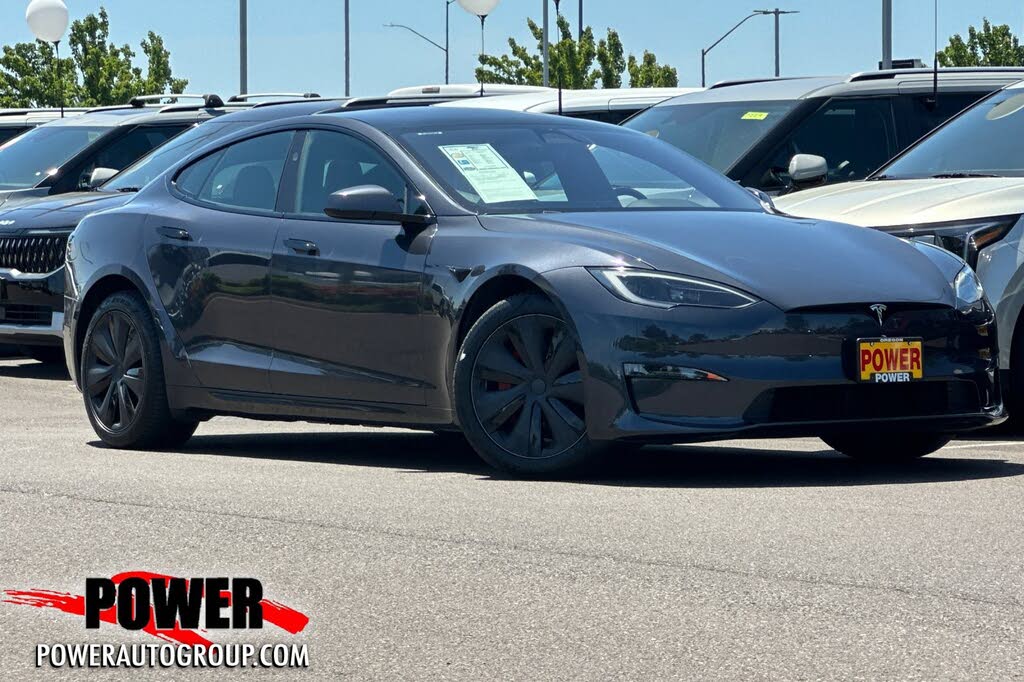 $14k below market Locked
2025 Tesla Model S
Plaid
Great deal: about $14k under fair value for its year, trim and miles.
Asking price $94,190Deal score 100 -
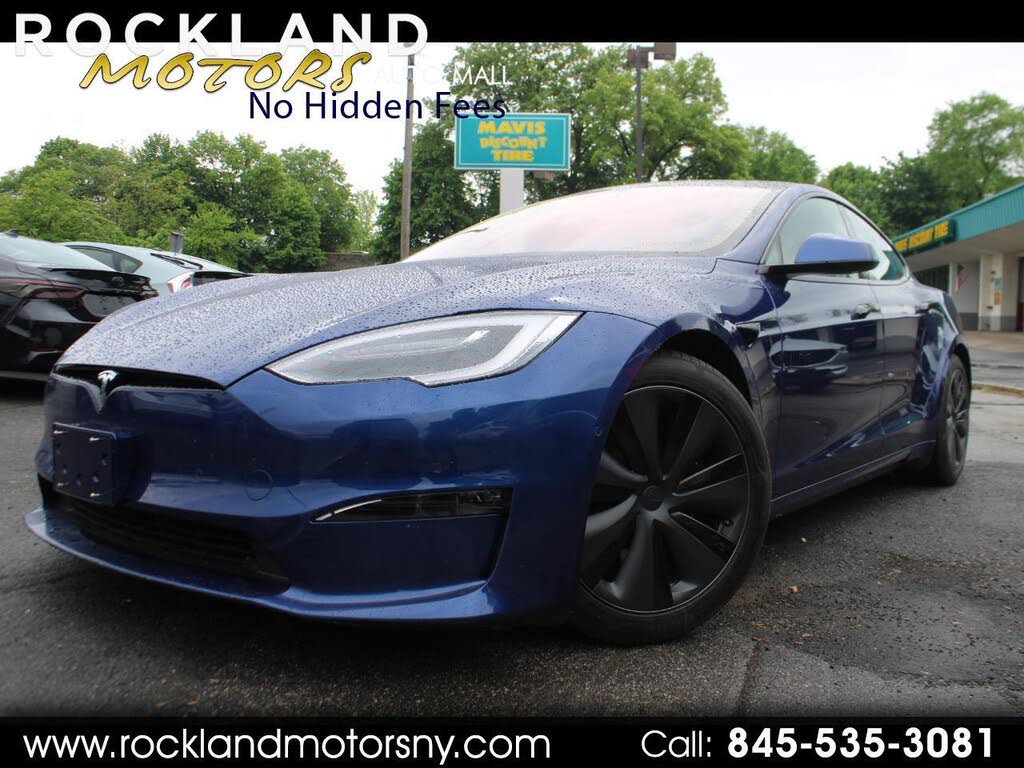 $10k below market Locked
2021 Tesla Model S
Plaid
Great deal: about $10k under fair value for its year, trim and miles.
Asking price $46,170Deal score 100 -
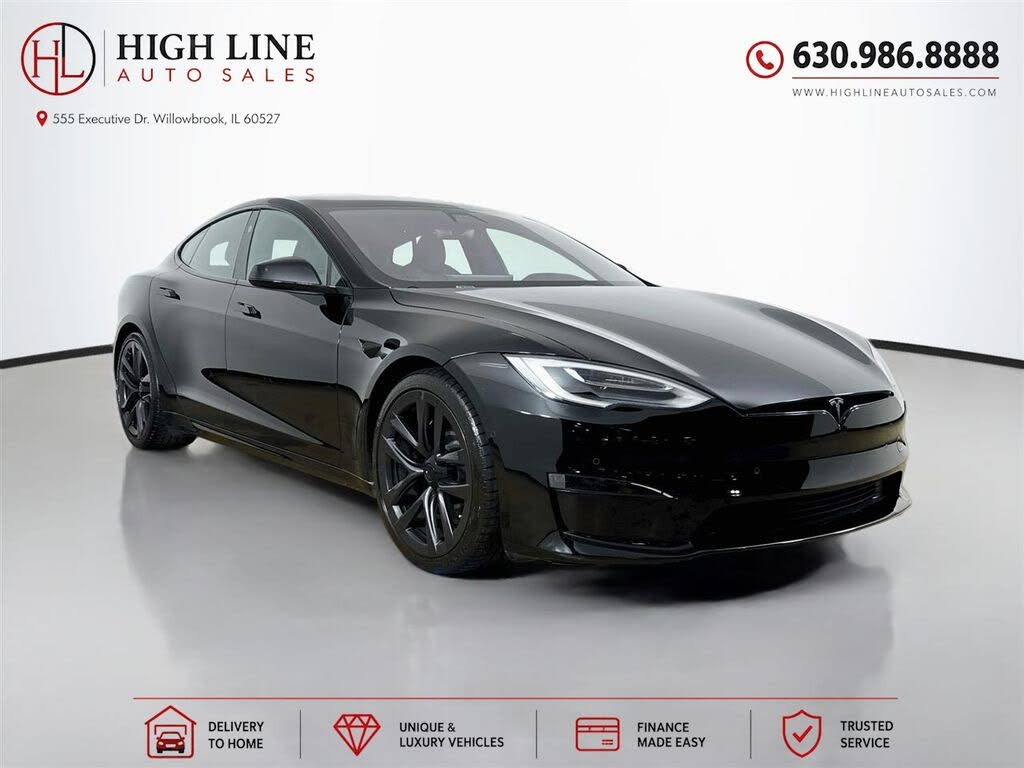 $8k below market Locked
2022 Tesla Model S
Plaid
Great deal: about $8k under fair value for its year, trim and miles.
Asking price $49,683Deal score 100 -
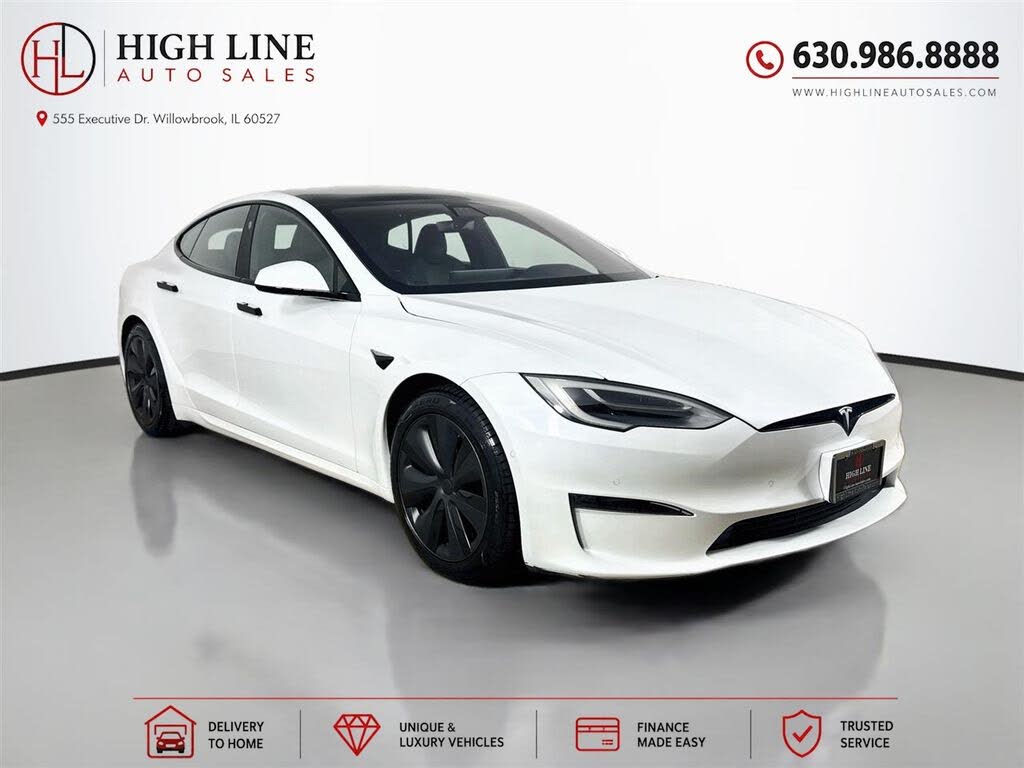 $7k below market Locked
2021 Tesla Model S
Plaid
Great deal: about $7k under fair value for its year, trim and miles.
Asking price $46,463Deal score 100 -
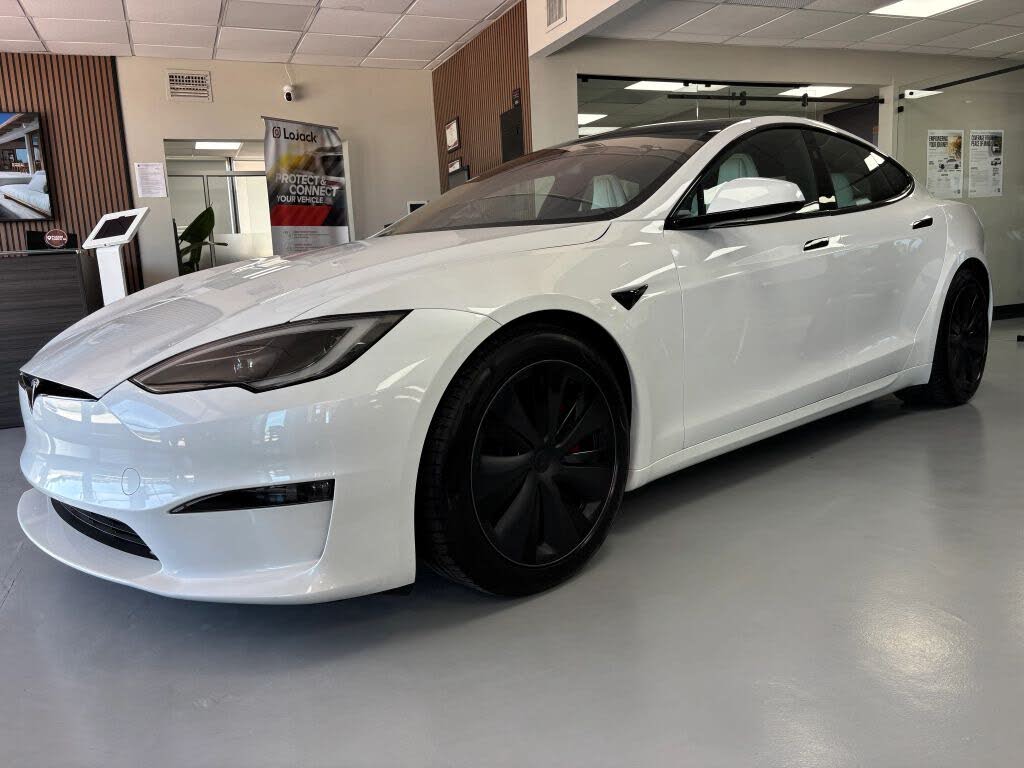 $16k below market Locked
2025 Tesla Model S
Plaid
Great deal: about $16k under fair value for its year, trim and miles.
Asking price $113,097Deal score 99 -
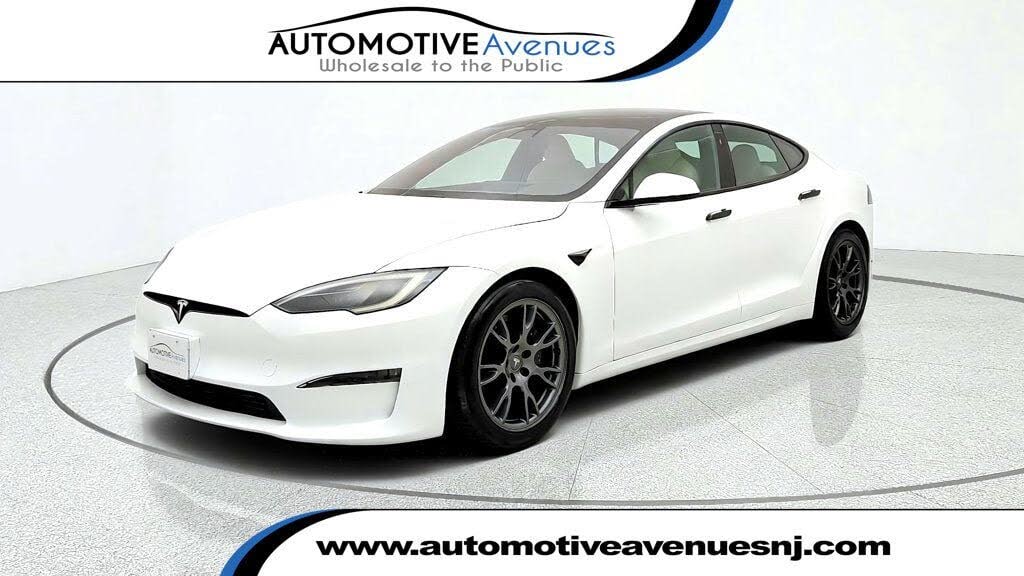 $8k below market Locked
2022 Tesla Model S
Plaid
Great deal: about $8k under fair value for its year, trim and miles.
Asking price $53,794Deal score 99
Members see every deal's VIN, dealer and listing link, plus a negotiation email.
Model S prices by model year
Median asking price for each model year in our latest scan, with the number of cars listed and their price range.
- 2026 Tesla Model S for sale $154,272
- 2025 Tesla Model S for sale $110,353
- 2024 Tesla Model S for sale $92,172
- 2023 Tesla Model S for sale $73,683
- 2022 Tesla Model S for sale $54,597
- 2021 Tesla Model S for sale $52,906
Model S fair values by trim and year
Our fair value is what comparable cars, same trim and model year with typical miles, are listed at in our latest market data. A car well under it is worth a close look; a car well over it needs a reason.
| Trim | Model year | Fair value | Typical miles |
|---|---|---|---|
| Plaid | 2024 | $91,115 | 17,900 |
| Plaid | 2023 | $74,142 | 31,700 |
| Plaid | 2022 | $60,364 | 39,400 |
| Plaid | 2021 | $55,765 | 43,200 |
Model S for sale now
-
2023 Tesla Model S
Plaid
Asking price $66,912 -

2024 Tesla Model S
Plaid
Asking price $90,145 -
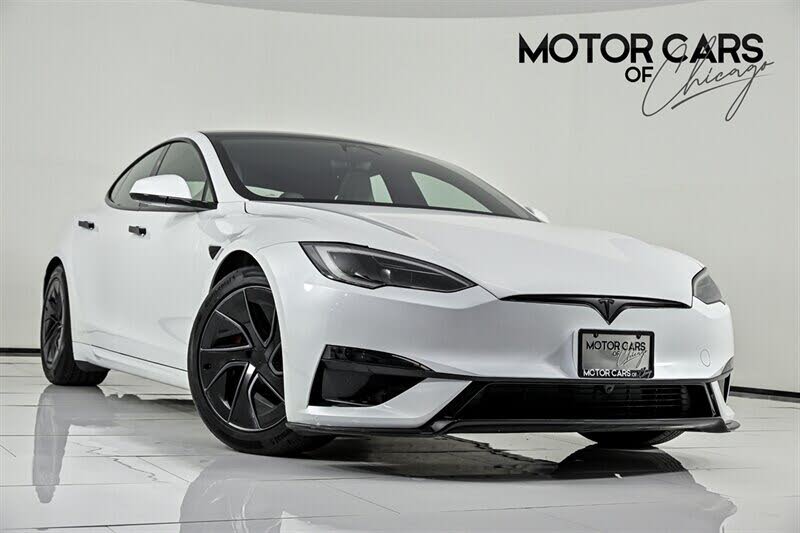
2026 Tesla Model S
Plaid
Asking price $155,353 -
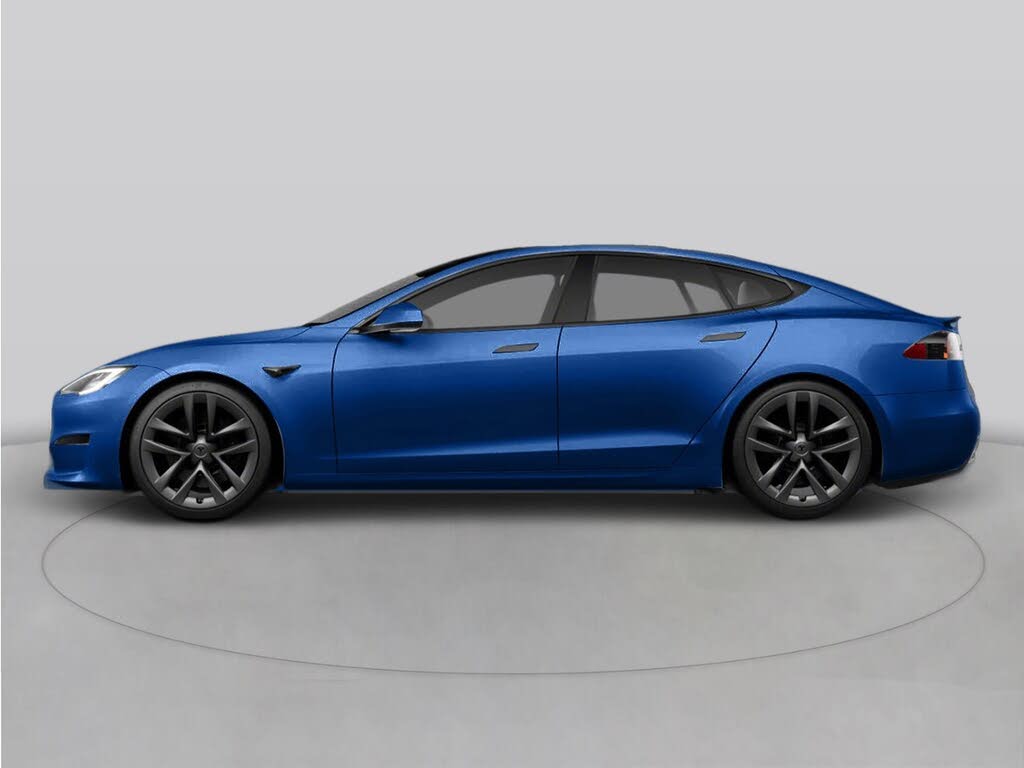
2021 Tesla Model S
Plaid
Asking price $56,195 -
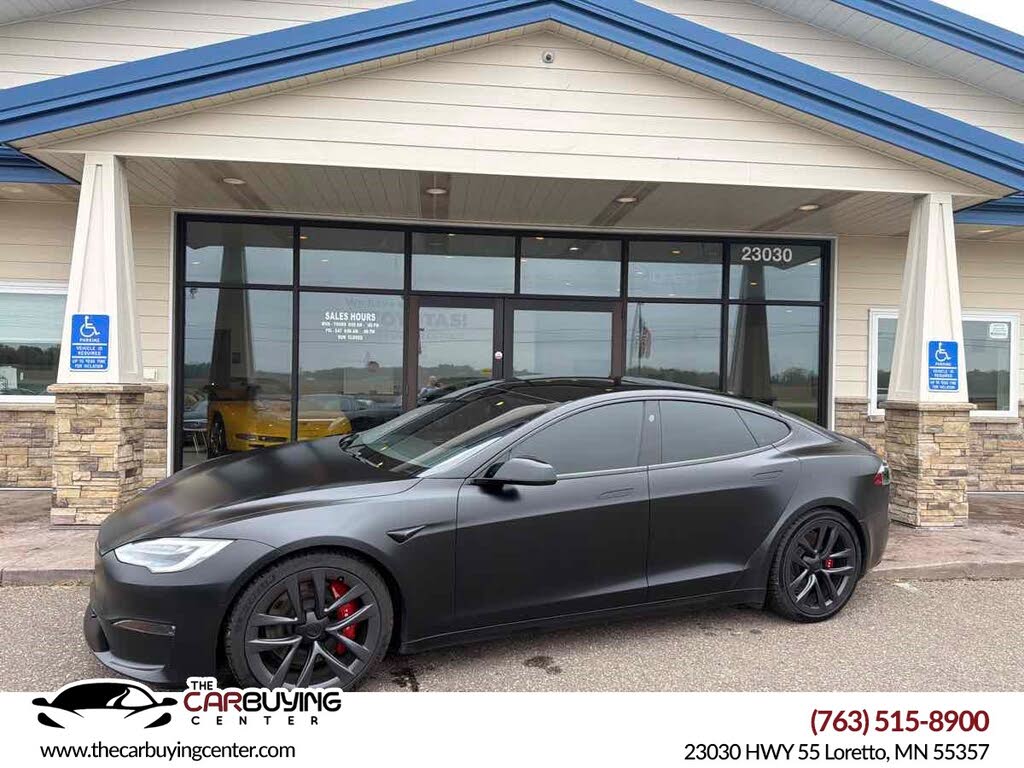
2021 Tesla Model S
Plaid
Asking price $60,345 -
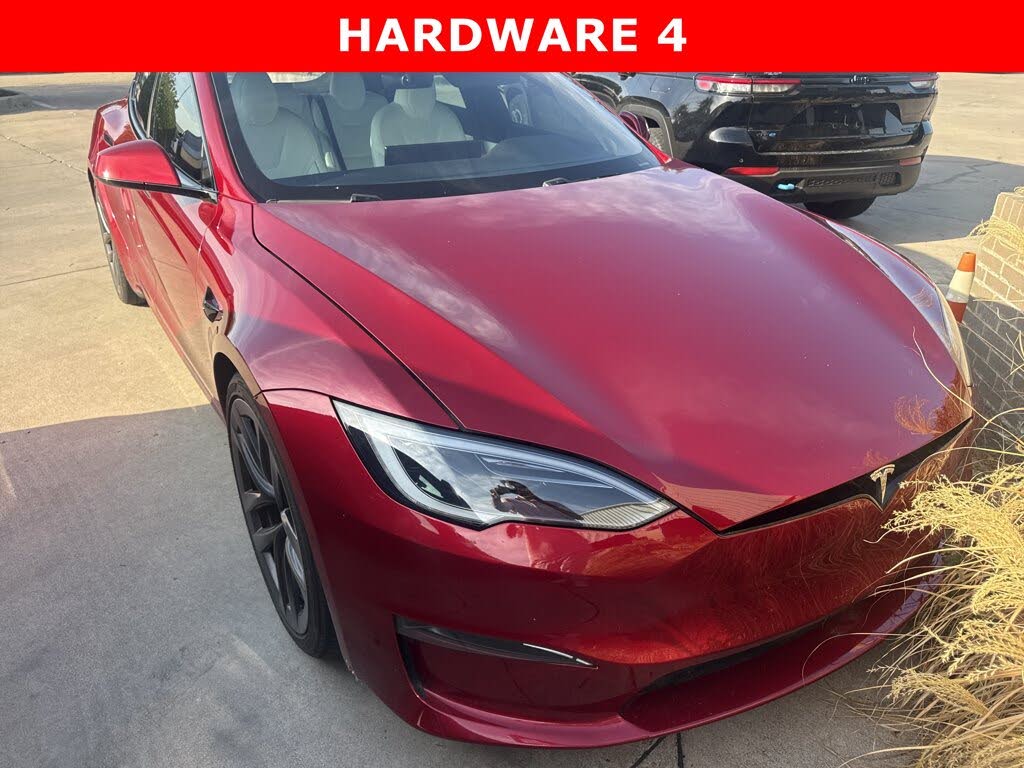
2023 Tesla Model S
Plaid
Asking price $61,715 -

2022 Tesla Model S
Plaid
Asking price $63,084 -
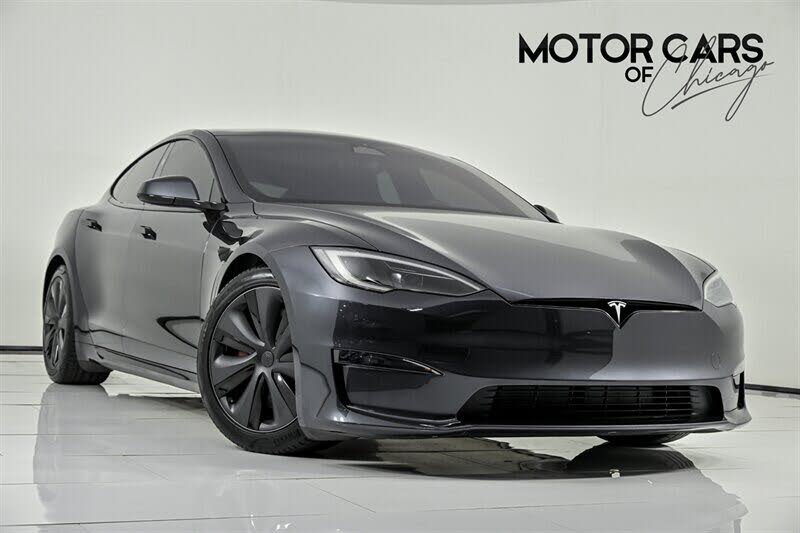
2025 Tesla Model S
Plaid
Asking price $110,353 -
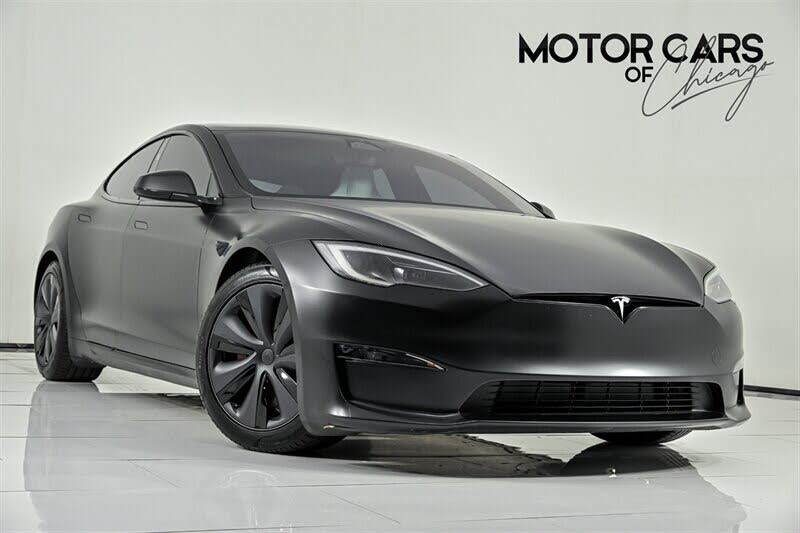
2025 Tesla Model S
Plaid
Asking price $115,353 -
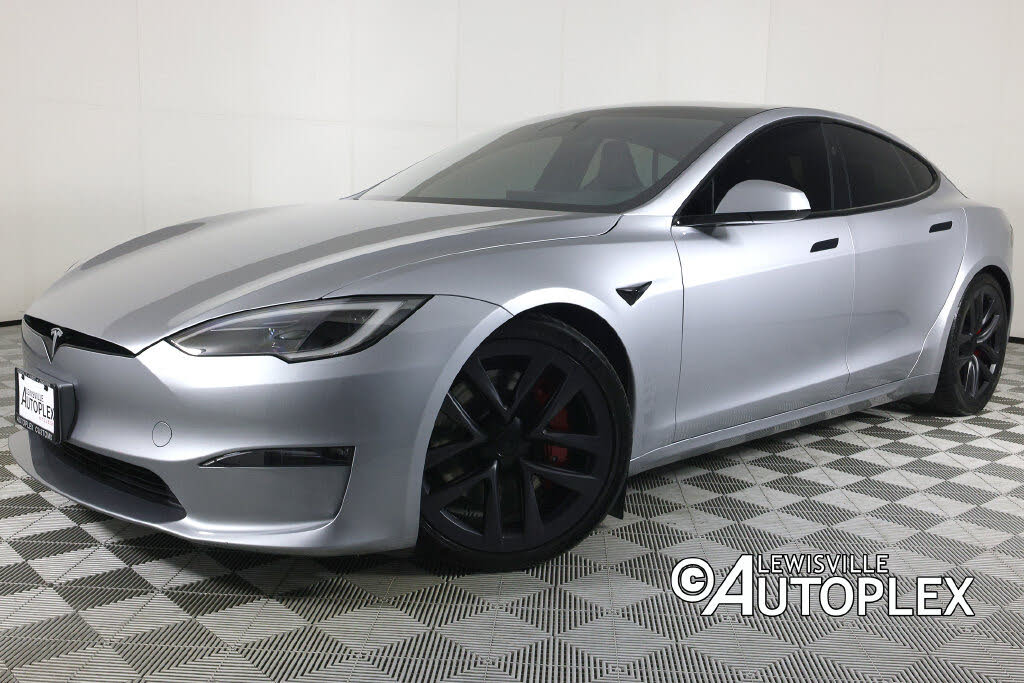
2025 Tesla Model S
Plaid
Asking price $125,216 -
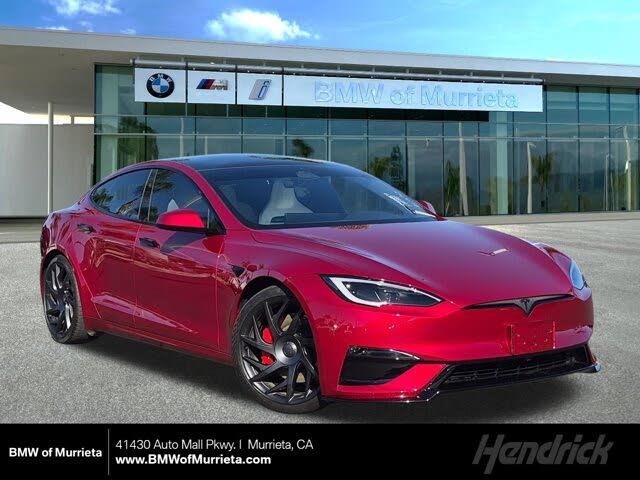
2026 Tesla Model S
Plaid
Asking price $148,811 -
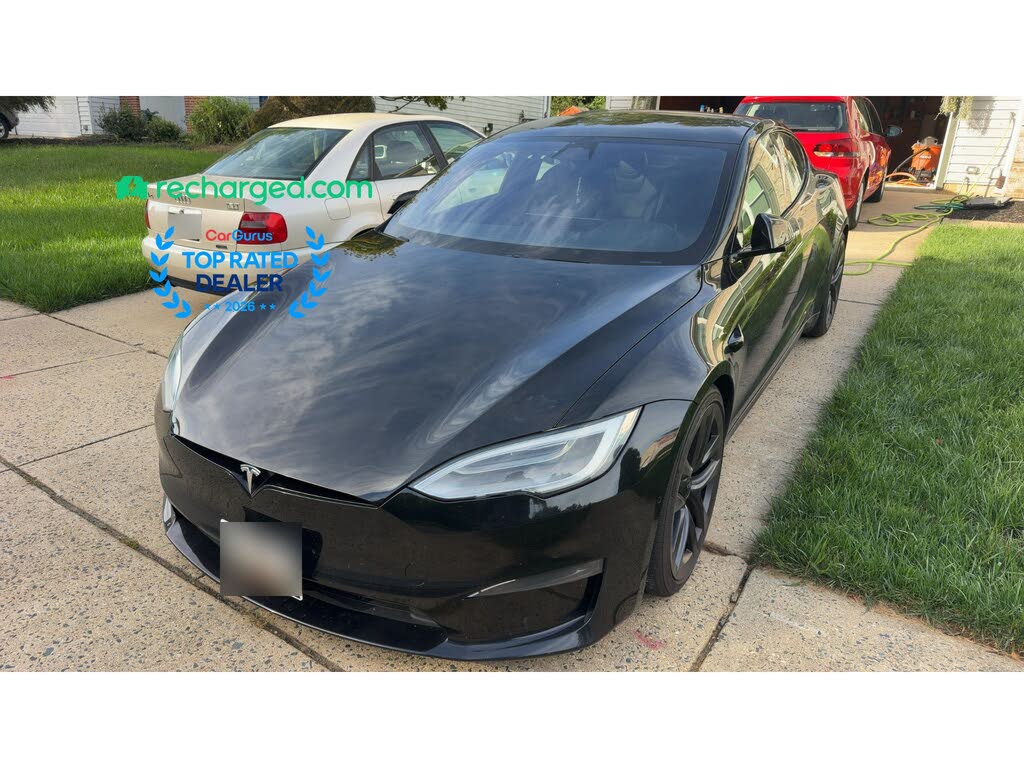
2021 Tesla Model S
Plaid
Asking price $46,717 -
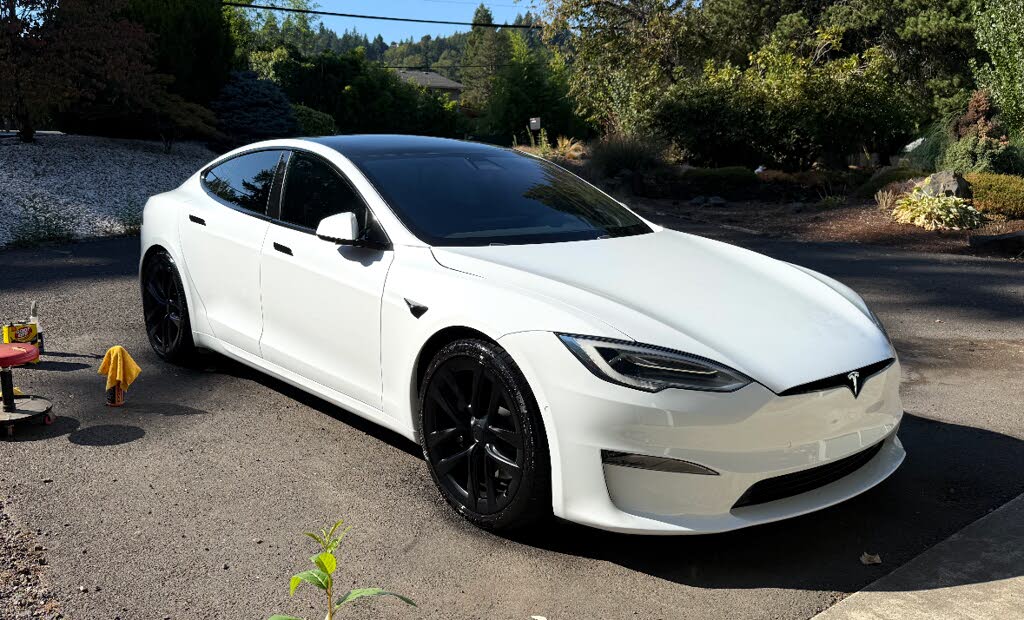
2021 Tesla Model S
Plaid
Asking price $55,790 -
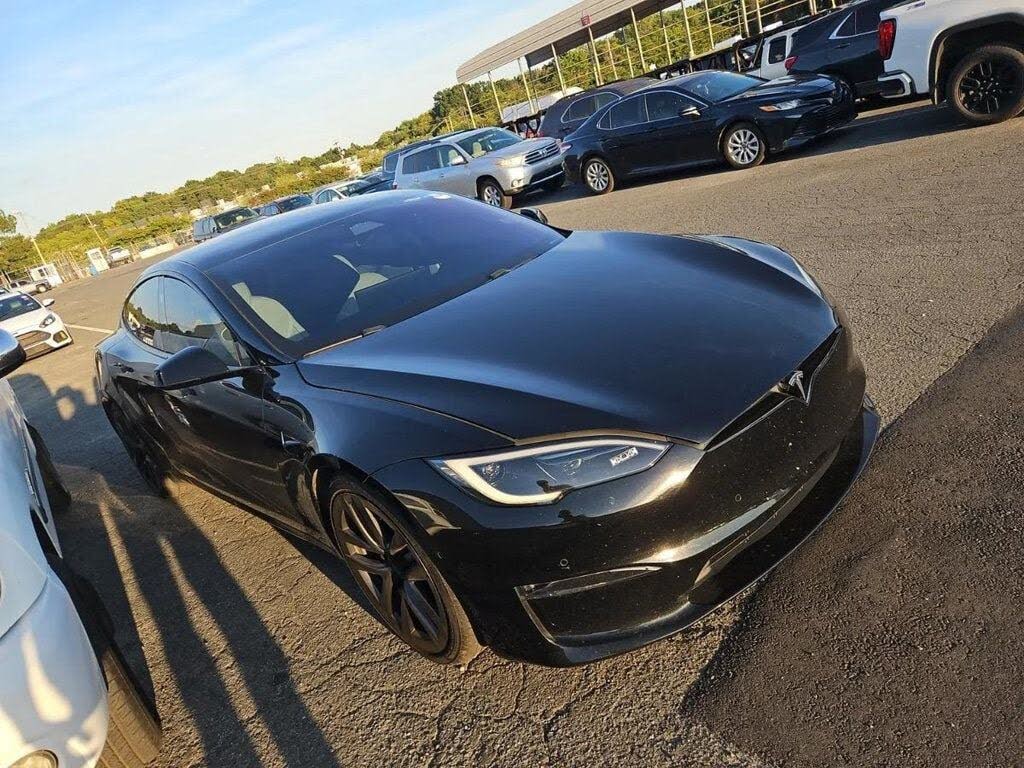
2022 Tesla Model S
Plaid
Asking price $58,997 -
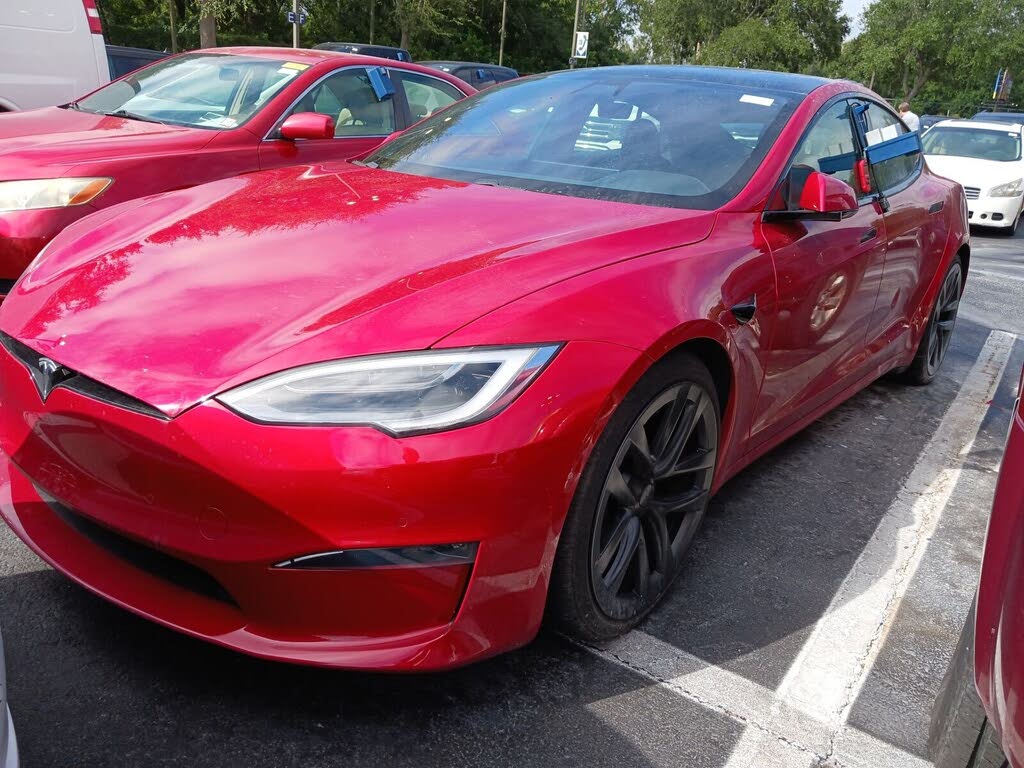
2021 Tesla Model S
Plaid
Asking price $60,994 -
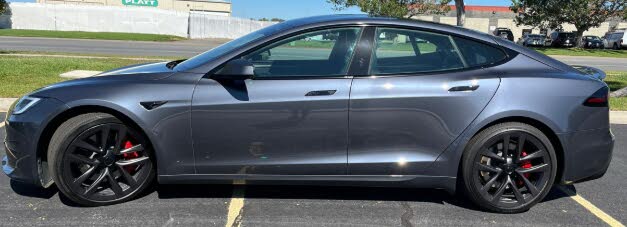
2023 Tesla Model S
Plaid
Asking price $80,798 -
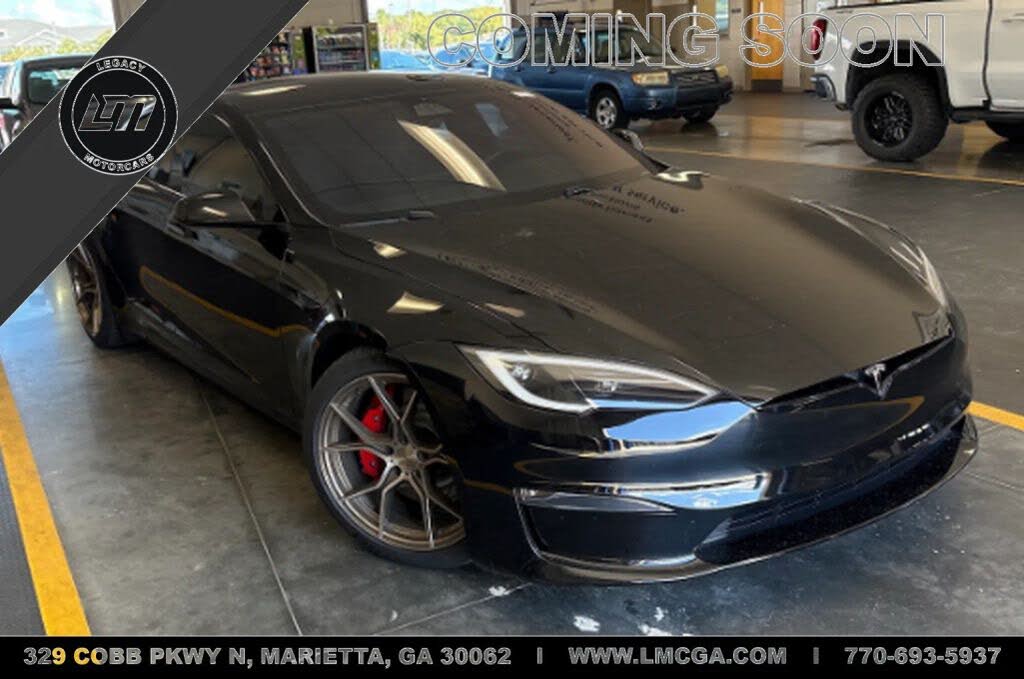
2024 Tesla Model S
Plaid
Asking price $86,795 -

2023 Tesla Model S
Plaid
Asking price $73,997 -
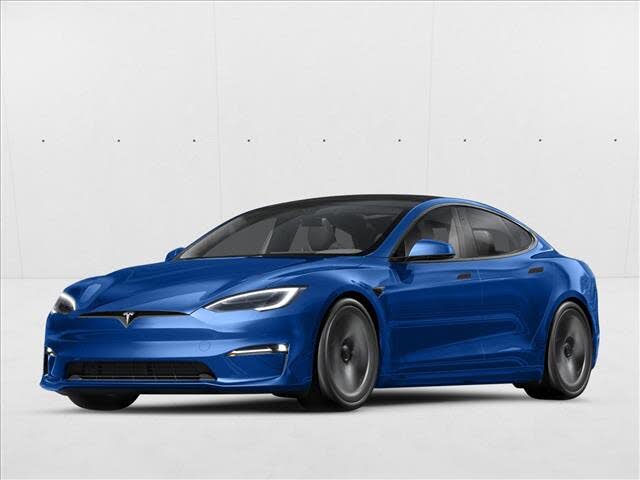
2024 Tesla Model S
Plaid
Asking price $85,220 -

2021 Tesla Model S
Plaid
Asking price $49,534 -

2022 Tesla Model S
Plaid
Asking price $49,670 -

2021 Tesla Model S
Plaid
Asking price $50,989 -

2023 Tesla Model S
Plaid
Asking price $69,997 -
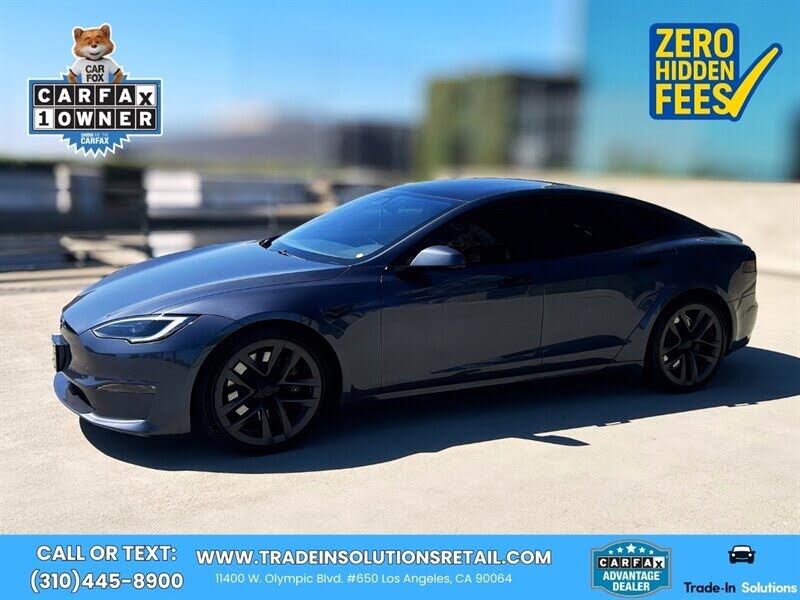
2023 Tesla Model S
Plaid
Asking price $71,973
Our verdict
Squeezed and CarVision PA point to the Long Range as the sensible buy, and the Plaid only if you will use the performance. Squeezed does not say to avoid 2021 and 2022 cars, but says to inspect them harder and price them accordingly. CarVision PA and AutoEdgeView both suggest starting at the refreshed cars for the cabin, range and fresher batteries. If the yoke puts you off, look at 2023 and later cars, and compare with the Model S vs Model 3 before you decide.
Insist on the heat pump record for any 2021-2022 car, closed recalls and a battery health report from Tesla. Without all three, walk away.
Sources
We read these pages and checked every fact in this guide against them. The words are ours. Researched Oct 31, 2026.
- 2021 Tesla Model S Used Buyer's Guide (3rd Gen) | Squeezed Squeezed
- Buying a 2nd Hand Tesla Model S in 2026: Range, Battery & Value Guide | AutoEdgeView AutoEdgeView
- Is a Used Tesla Model S Worth It? | CarVision PA CarVision PA
- 2021-2025 Tesla Model S Reliability Score: 8.2 out of 10 | TWD The Weekly Driver
- 2021 Tesla Model S Reliability - Consumer Reports Consumer Reports
- 2021 Tesla Model S Service Schedules & Maintenance Pricing | Kelley Blue Book Kelley Blue Book
- Recalls and owner complaints for the Model S NHTSA
Model S: common questions
What is the best Model S to buy?
The Long Range is the sensible choice for most buyers, as it is still very fast with slightly better range and lower running costs. Take the Plaid only if you want the performance. Cars from 2023 have the round wheel back, which many buyers prefer.
What goes wrong with the Model S?
Early 2021-2022 cars had heat pump and Octovalve faults, plus assembly, seal and trim problems. Owners of 2021 cars also reported door handle, key, latch and steering complaints. Air suspension struts are costly out of warranty.
Is the Model S reliable?
Mostly yes for the powertrain, less so for early cars. The Weekly Driver notes fewer NHTSA powertrain complaints than similar EVs, but Consumer Reports rates the 2021 car much less reliable than its model-year peers.
How much does it cost to run a Model S?
Tires and insurance are the main costs. Four 21-inch tires run $1,400 to $1,800 installed per AutoEdgeView, and insurance runs 20-40% above comparable combustion luxury sedans. Service is due every 12 months or 12,500 miles.
How much is a used Model S?
Asking prices for the 236 cars we track for sale right now run from $40,905 to $180,757, with a median of $60,573. Model year, version, mileage and history move the price most; the prices by model year and fair values on this page show where a car should sit.
Has the Model S been recalled?
NHTSA lists 29 recall campaigns filed for the 2021 to 2027 model years as of Oct 31, 2026, the latest for back over prevention. Not every car was affected, so check the VIN of any car you're considering at nhtsa.gov/recalls.